
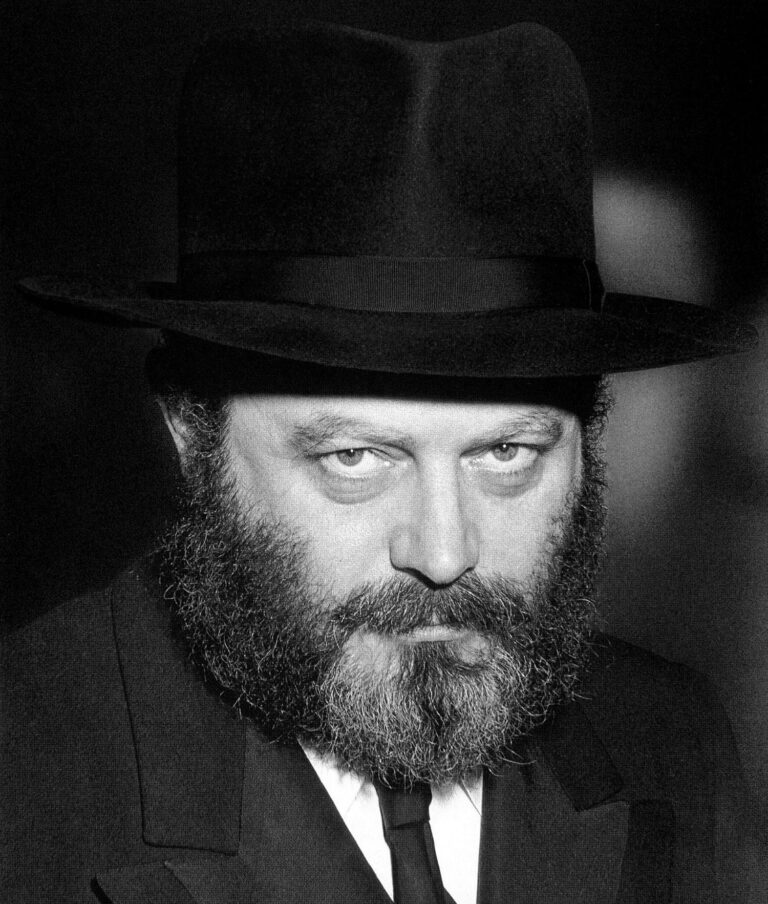
Throughout the years, the Rebbe remained personally involved in the Buffalo shlichus.
In 1981, about ten years into his shlichus, Rabbi Gurary faced a particularly difficult period. As the University at Buffalo shifted to its sprawling new Amherst campus, it became increasingly difficult to gather students, and even assembling a minyan on Shabbos and Yom Tov could be a struggle. Having grown up spending Yom Tov among thousands of Chassidim in Crown Heights, Rabbi Gurary later recalled how lonely those days in Buffalo could sometimes feel.
During a yechidus, Rabbi Gurary wrote to the Rebbe about this feeling of loneliness. The Rebbe responded in Yiddish:
”וויבאלד אז דו טוסט די ארבעט פון דעם רבי׳ן דעם שווער, איז ער מיט דיר.”
“Since you are doing the work of the Rebbe, my father-in-law, he is with you.”
”און מיר זיינען אויכעט צוזאמען.”
“And we are also together.”
The Rebbe to Rabbi Noson Gurary, 1981
Rabbi Gurary later recalled that hearing directly from the Rebbe that he was with him, and understood what he was going through, gave him tremendous strength to continue the work. These words became a source of strength and encouragement to Rabbi and Mrs. Gurary as they continued their shlichus in Buffalo.1
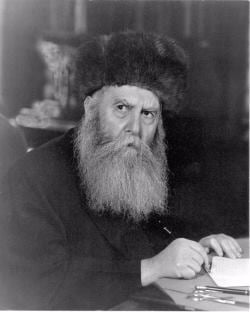
The wording of the Rebbe’s response takes on particular significance in this context. Rabbi Gurary had never personally received a shlichus from the Previous Rebbe. Yet the Rebbe told him, “Since you are doing the work of the Rebbe, my father-in-law, he is with you.” Although it was not unusual for the Rebbe to refer to his own shluchim as shluchim of the Previous Rebbe, in this context, it would seem that the Rebbe was identifying Rabbi Gurary’s work in Buffalo as a continuation of the shlichus that the Previous Rebbe had established there decades earlier.
The following gives added meaning to the Rebbe’s words. In 1943, shortly before Rabbi Hershel Fogelman left for Buffalo, he told the Previous Rebbe that whenever he traveled away he felt alone: ”פיל איך זיך עלענט”, “I feel alone.” The Previous Rebbe immediately reassured him:
”דו ביסט נישט עלענט, וואו דו טוסט פאר הרבצת תורה בין איך מיט דיר.”
“You are not alone. Wherever you work for the strengthening of Torah, I am with you.”2
The Previous Rebbe to Rabbi Hershel Fogelman, 1943
Nearly forty years later, Rabbi Gurary was carrying forward that same shlichus in Buffalo and expressed the same feeling of loneliness. The Rebbe’s answer appears to make clear that the Previous Rebbe’s assurance to Rabbi Fogelman did not end with Rabbi Fogelman personally. Since Rabbi Gurary was now “doing the work of the Rebbe, my father-in-law,” the Previous Rebbe’s promise, “You are not alone … I am with you,” continued with the shliach carrying on that work in Buffalo.
The Rebbe then added a further dimension: “And we are also together.”
Seen in this light, these words were not only personal assurances to the individual shluchim who first heard them. They were brachos connected to the shlichus itself, a shlichus that continues in Buffalo to this day.
Those same brachos, “You are not alone … I am with you” and “And we are also together,” continue to accompany and strengthen the shluchim carrying on the Rebbeim’s work in Buffalo today!
- Rabbi Noson Gurary, JEM My Encounter, “We Are Together,” Living Torah, Disc 137, Program 545; quoted in A Chassidisher Derher, Nissan 5776, p. 31. ↩︎
- Rabbi Yehuda Tzvi (Hershel) Fogelman, Ten LaChacham, “Reshimas Zichronos V’Sipurim,” sec. 18: the yechidus at the end of Menachem Av 5703 (1943) and the Previous Rebbe’s words בא להוסיף ולא לגרוע and דו ביסט נישט עלענט, וואו דו טוסט פאר הרבצת תורה בין איך מיט דיר; he concludes ובאמת היה הצלחה גדולה. That he kept the words in his wallet: Fogelman teshura, 5775, Story 18, pp. 16–17. ↩︎